What is Ghangaria and Why is it Important?
Ghangaria is a small Himalayan village at 3,048 metres above sea level in the Pushpawati river valley of Chamoli district, Uttarakhand. It is the only base camp for two of the most celebrated destinations in the Indian Himalayas — Gurudwara Hemkund Sahib (the sacred Sikh shrine at 4,329m, 6km uphill) and the Valley of Flowers National Park (UNESCO World Heritage Site, 3.5km east). Every pilgrim and trekker visiting Hemkund Sahib must pass through Ghangaria.
There is no motorable road to Ghangaria. The village is accessible only by a 13km trek from Govindghat along the Pushpawati river, or by helicopter from Govindghat (10–15 minutes). Despite its remote location, Ghangaria is well-served with accommodation, food, medical facilities, and porter/pony services during the June–October yatra season. The Gurudwara Ghangaria (managed by the Shri Hemkund Sahib Management Trust) provides free accommodation (sarai) and free langar (community meal) to all pilgrims — a remarkable service at 3,048m.
The village sits in a dramatic valley. To the north, the trail climbs steeply through rhododendron forest to Hemkund Sahib. To the east, a gentler forest path leads into the Valley of Flowers. On clear mornings, snow peaks ring the horizon on all sides.
Ghangaria Highlights
Facilities & Accommodation at Ghangaria
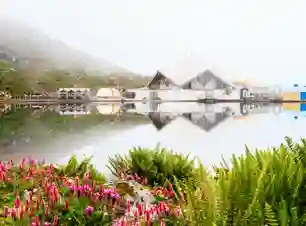
Despite being accessible only on foot or by helicopter, Ghangaria offers surprisingly good facilities for pilgrims during the yatra season (June–October).
The Gurudwara Ghangaria provides free dormitory accommodation to all pilgrims with clean rooms and blankets. Capacity is large but can fill up in peak July–August season. Arrive by 2 PM for best allocation — first-come, first-served. Bring your yatra registration slip from Govindghat.
Several private guesthouses and dharamshalas operate during the season. Basic rooms start at ₹500; better rooms with attached bathrooms go up to ₹2,500. Book in advance for July–August peak season. Our packages include pre-booked accommodation at Ghangaria.
Gurudwara langar (free vegetarian meal — dal, rice, roti, sabzi) is served throughout the day. Small dhabas offer Maggi, chai, parathas and hot meals at nominal prices. Strictly no non-vegetarian food anywhere in Ghangaria.
A medical post provides basic first-aid and treats altitude sickness. Oxygen cylinders are available for pilgrims experiencing breathlessness. For serious emergencies, helicopter evacuation to Govindghat or Joshimath hospital is arranged by the Trust free of charge.
Trek from Govindghat to Ghangaria — Route Guide
The Govindghat to Ghangaria trek is 13km along the Pushpawati river valley, ascending approximately 1,200 metres. Allow 5 to 7 hours for ascent. The trail is wide and well-maintained throughout. The first 4km (to Pulna) is partly motorable and share jeeps sometimes operate this stretch in the morning.
Register at Gurudwara Govindghat and collect your free yatra slip. Hire a pony or porter here if needed. Cross the Alaknanda suspension bridge to start the trail. Start by 6–7 AM for a comfortable day-trek arrival at Ghangaria.
Fairly flat section along the Pushpawati river. Share jeeps sometimes cover this in the morning. Tea shops at Pulna — a good refreshment stop before the proper climb begins.
Steady climb through oak and rhododendron forest with river gorge views. Bhyundar village has tea stalls and a small Gurudwara. This is the midpoint — a good place for rest and a hot meal.
The final stretch climbs through denser forest with increasingly dramatic mountain views. The trail opens as you approach Ghangaria — the Gurudwara's golden dome and kirtan announce your arrival. Register at the sarai on arrival.
Best Time to Visit Ghangaria
Ghangaria is open only June to October:
Yatra opens first week of June. Fewer crowds, clear skies, Valley of Flowers starts blooming. Best for peaceful darshan at Hemkund Sahib with shorter wait times. Temperatures 5–15°C.
Maximum footfall — Valley of Flowers in full bloom (July best for wildflowers). Accommodation fills fast; book in advance. Carry rain gear for heavy afternoon showers. Gurudwara sarai very crowded.
Post-monsoon clarity, crisp air, fewer pilgrims. Valley of Flowers has late-season blooms. Hemkund Sahib trek route clear with the best mountain views. Ideal balance of weather and crowd levels.
Heavy snowfall buries the entire valley. Hemkund Sahib closes by mid-October; Valley of Flowers by end-October. Completely inaccessible November to May. No visits possible in any form.
How to Reach Ghangaria
All visitors must first reach Govindghat (the road-head on NH-7), then trek 13km or take the helicopter to Ghangaria.
Rishikesh → Devprayag → Rudraprayag → Karnaprayag → Chamoli → Joshimath → Govindghat. Best done in two legs with a halt at Joshimath (256km). Tour Venture India arranges cabs from Haridwar/Rishikesh to Govindghat.
Helicopter service operates during yatra season from Govindghat helipad. Cost approximately ₹3,000–₹4,000 one way per person. Book at the counter by 7 AM. Ideal for elderly or those with health conditions.
Flights from Delhi (40 min), Mumbai, Bengaluru. Cab from airport to Govindghat — approximately 9 hours. Or fly to Dehradun and halt overnight at Joshimath en route.
Nearest stations: Haridwar (285km) and Rishikesh (270km). Multiple trains from Delhi and other cities. From the station, hire a cab or take a GMOU bus to Joshimath (8 hours), then a local share jeep to Govindghat (20km).
Essential Tips for Visiting Ghangaria
- Start the Govindghat trek by 6–7 AM — the 13km trek takes 5–7 hours. Early start gives cool morning temperatures and ensures arrival before afternoon cloud cover.
- Register at Govindghat Gurudwara before starting — collect a free yatra slip required for sarai accommodation and langar at Ghangaria.
- Hire a pony or porter at Govindghat if needed — especially recommended for elderly pilgrims or those with knee problems. Rates are government-fixed; insist on a receipt.
- Acclimatise at Ghangaria before Hemkund Sahib — spend at least one night at 3,048m before attempting the 6km climb to 4,329m. The 1,281m ascent in one go causes altitude sickness in many visitors.
- Carry sufficient cash — there are no ATMs at Ghangaria. Withdraw at Joshimath. UPI works intermittently at some dhabas but is not reliable.
- Carry rain gear for July–August — heavy afternoon showers are common. A waterproof jacket and pack cover are essential. The trail can be slippery in rain.
- Respect Gurudwara rules — cover your head before entering the Gurudwara. Alcohol and non-vegetarian food are strictly prohibited throughout Ghangaria.