What is Bijrani Zone and Why is it Famous?
Bijrani Zone is one of the most popular and easily accessible safari zones in Jim Corbett National Park, located barely 1km from Ramnagar town. Named after the Bijrani Forest Rest House (which is now used only for administration), the zone covers a diverse landscape of dense mixed sal and dhak forest, open grassland patches and seasonal streams — a rich habitat that attracts wildlife year-round. It is widely regarded as the best zone for first-time Corbett visitors due to its proximity to Ramnagar, ease of access and reliable wildlife activity.
The zone is famous for tiger sightings — particularly in the morning safaris when tigers are spotted crossing the open grasslands or drinking at streams. Bijrani also offers excellent sightings of leopards, Asian elephants, sambar deer, chital, wild boar and gharials along the Ramganga tributary. The varied terrain — from dense canopy forest to open meadows — makes every safari uniquely different. The zone is also a birding paradise, with pied hornbills, fishing eagles, jungle owlets and hundreds of other species.
Unlike Dhikala Zone, Bijrani is a day-use buffer zone — no overnight stays are permitted. Jeep safaris run in morning (6 AM – 9 AM) and evening (3 PM – 6 PM) shifts. This makes it ideal for day-trippers from Delhi who want a wildlife experience without planning an overnight stay.
Bijrani Zone Highlights
Wildlife at Bijrani — What You Can See
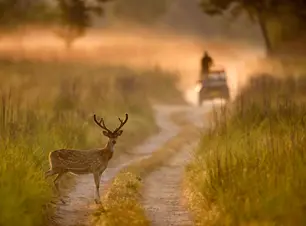
Bijrani Zone's mixed landscape supports a wide variety of wildlife. The Bijrani chaur (open grassland near the Ramganga tributary) is the key wildlife hotspot — tigers, elephants and deer are regularly spotted here at dawn. The sal forest canopy is dense and cool, with leopards often seen resting on tree branches or crossing the forest tracks in the early morning.
Key Wildlife Sightings
Tigers are regularly spotted at the Bijrani chaur and along the stream crossings. Morning safaris entering at 6 AM offer the best tiger sighting chance — especially in February–April when dry conditions bring animals to water sources.
Leopards are often seen in the upper forest canopy. Elephant herds move through the zone, particularly in winter mornings. Sambar and chital are frequently spotted in large numbers throughout. Wild boar, langurs and rhesus macaques are common.
Bijrani is outstanding for birdwatching. Great Hornbill, Crested Serpent Eagle, Pied Kingfisher, White-rumped Vulture, jungle owlets and various warblers are commonly spotted. The forest streams attract kingfishers and wagtails year-round.
Safari Booking — How to Book Bijrani Zone
Bijrani Zone permits must be booked in advance through the official Jim Corbett portal. The zone is popular and morning slots fill quickly, especially on weekends and in peak season.
Private jeep safaris offer the best experience — flexible routes, quiet engine, expert guide. Entry is via Bijrani Gate, 1km from Ramnagar. Permits cost approximately ₹3,500–₹5,000 per jeep including guide and permit. Book through corbettonline.uk.gov.in or via Tour Venture India.
Morning safari: 6:00 AM – 9:00 AM. Evening safari: 3:00 PM – 6:00 PM (timings may vary by season). Vehicles must report 30 minutes before shift start. Zone is closed on Wednesday afternoons and all day Thursday (as of 2026 — verify at time of booking).
Book at least 2–4 weeks in advance for weekdays; 4–6 weeks for weekends in Feb–April peak season. The Ramnagar Forest Reception Office also issues same-day permits if slots are available — but this is not guaranteed. Tour Venture India can assist with online booking.
Best Time to Visit Bijrani Zone
Bijrani Zone is open November to mid-June. Each season offers different experiences:
Peak tiger season. Dry conditions, short grass, excellent visibility. Tigers and wildlife at waterholes. Book in advance — very popular. Temperatures 15–35°C.
Zone reopens mid-November. Cool weather (8–20°C). Migratory birds arrive. Good wildlife activity. Forest is green and lush after monsoon. Fewer crowds than peak season.
Very hot (35–42°C) but animals at waterholes — good sighting opportunities. Zone closes mid-June for monsoon. Best done with early morning safaris only.
Zone closes mid-June to mid-November for monsoon season. Roads become waterlogged. Park reopens mid-November with lush post-monsoon forest.
How to Reach Bijrani Zone
Bijrani Gate is located 1km from Ramnagar town, making it the most conveniently reached zone in Jim Corbett.
Delhi → NH9 → Moradabad → Ramnagar → Bijrani Gate (1km from town). Start by 10–11 PM for morning safari. Tour Venture India arranges cabs from Delhi/NCR with overnight journey timing.
Haridwar/Rishikesh → Kotdwar → Ramnagar → Bijrani Gate. Early morning start reaches Ramnagar in time for the morning safari. Tour Venture India offers pickup from Haridwar and Rishikesh.
Ramnagar has its own station with direct trains from Delhi (Corbett Link Express, Ranikhet Express). Bijrani Gate is literally 1km from the station — walk or take an auto-rickshaw. Best train for morning safari: the one arriving at Ramnagar before 5:30 AM.
Nearest airport is Pantnagar (80km from Ramnagar, ~2 hours by taxi). Flights from Delhi (30 min). Jolly Grant Airport, Dehradun (180km) has more flight options.
Essential Tips for Bijrani Zone Safari
- Book in advance — morning slots fill quickly, especially Feb–April. Book at least 2 weeks ahead for weekdays and 4–6 weeks for peak season weekends.
- Take the morning safari — Bijrani's morning safari (6–9 AM) offers the best wildlife activity. Evening is also good but mornings have better light and more animal movement.
- Wear muted colours — earth tones (khaki, olive, brown) help you blend in. Avoid bright whites, reds and blues. Wildlife is more relaxed around camouflaged observers.
- Stay silent — no talking, music or phone calls once inside. Tigers detect the slightest sound — a quiet jeep sees far more wildlife than a noisy one.
- Carry binoculars — many sightings are at 100–300m distance. A good 8×42 or 10×42 binocular makes the difference between a confirmed sighting and a silhouette.
- No plastic inside the zone — carry reusable bottles. No single-use plastic allowed. Forest guards can levy on-the-spot fines.